Free Tourist Attractions In Sydney
The sandstone bench at Mrs Macquarie's Chair costs nothing to sit on, frames the Opera House and the Harbour Bridge in a single view, and sits ten minutes on foot from the busiest ticket desks in the city.
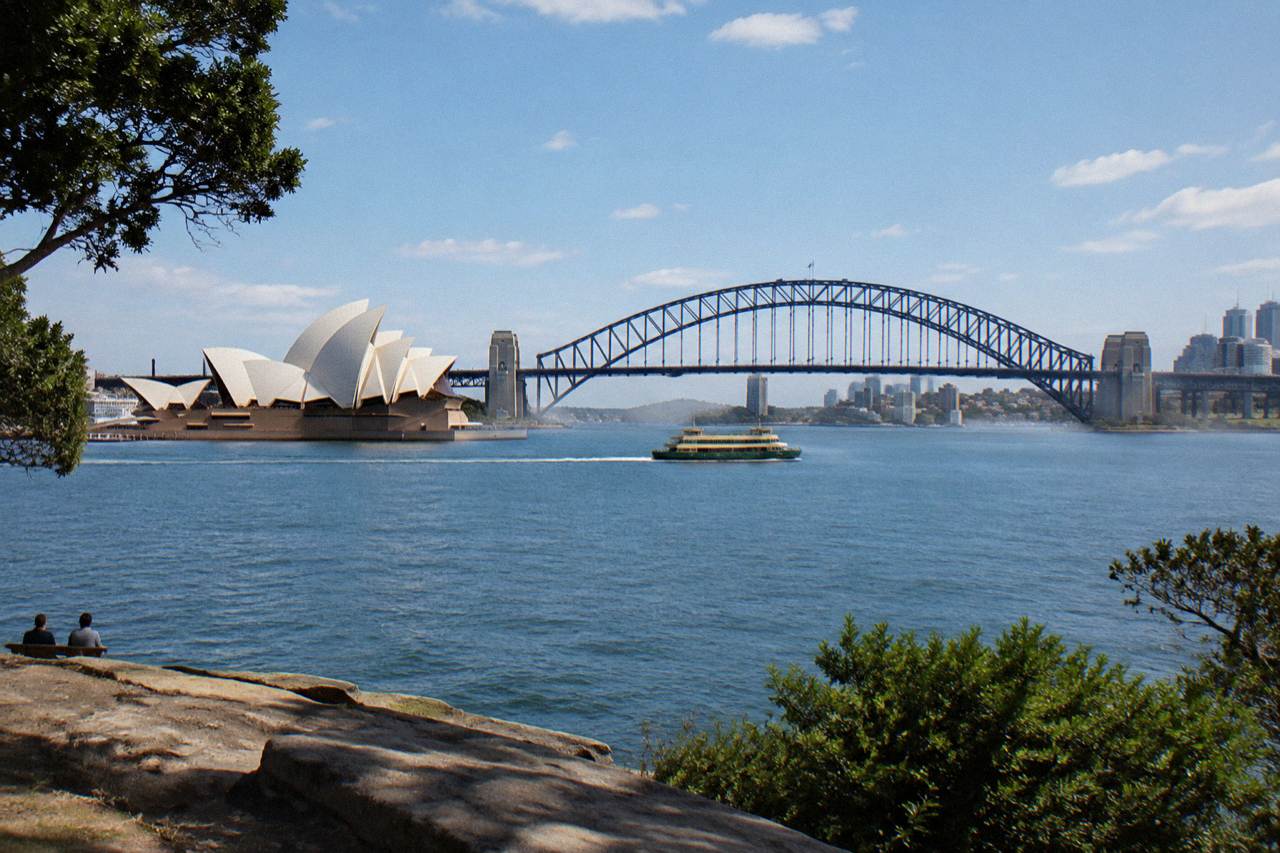
Sydney's most famous sights split cleanly into two groups, and the split surprises people. The Opera House and the Harbour Bridge, the two structures on every postcard, cost nothing to see from the outside: the Opera House forecourt is open public space and the Harbour Bridge pedestrian walkway is a free public path. What charges money are the paid experiences layered on top, the guided interior tours of the Opera House and the BridgeClimb ascent. The same pattern repeats across the city. Free-entry museums sit beside ticketed exhibitions, free coastal paths run past paid beach facilities, and a set of free walking tours, 5 in total across GuruWalk and freetour.com, of which 3 are featured on this site, covers the historic centre on foot with no fixed price at all. This guide lays out what is genuinely free, states the conditions wherever an attraction is only free under certain circumstances, and names the paid companions honestly so nobody turns up with the wrong expectation.
The practical payoff of that split is bigger than it sounds. A visitor who understands it can build an entire itinerary around the free tier without missing a single headline sight, because the postcard views in Sydney are nearly all public ground: the foreshore paths, the bridge deck, the garden lawns and the museum foyers are the things people photograph, and the paid products are the things people climb inside or behind. Getting the split right is also the difference between a day that costs nothing and a day that quietly accumulates tickets, which is why every entry below states its own terms rather than leaning on a bare word like "free".
Free Tourist Attractions In Sydney
The best free tourist attractions in Sydney are the harbour foreshore walks (Mrs Macquarie's Chair, Cremorne Point to Kirribilli, Camp Cove at Watsons Bay), the Bondi to Coogee coastal walk, the free-entry museums (the Art Gallery of NSW, the Australian Museum, the State Library of NSW, Hyde Park Barracks and the Museum of Sydney), the Royal Botanic Garden, and the pedestrian walkway across the Harbour Bridge. All of these are free without conditions, and the Art Gallery of NSW and Australian Museum state their free general entry on their own visit pages.
That list is longer than most visitors expect, and it holds up because the free tier in Sydney is not a set of second-rate leftovers. The Art Gallery of NSW confirms on its own visit page that general entry is free, with fees applying only to some exhibitions. The Australian Museum states the same thing in plainer terms: general entry is free. The State Library of NSW opens its general entry, exhibitions and reading rooms at no charge. Hyde Park Barracks Museum and the Museum of Sydney, both run by Museums of History NSW, are listed with free entry on the NSW Government's locations-and-attractions pages. The Chau Chak Wing Museum at the University of Sydney is explicitly free with no ticket required.
The museum cluster deserves a note on how it behaves in practice, because "free general entry" is not a discount coupon, it is the default state of the building. At the Art Gallery of NSW that means the permanent collection galleries, the galleries of Australian art, Aboriginal and Torres Strait Islander art, and the Asian and European galleries, can all be walked into off the street with no ticket desk at all. The word "some" in the gallery's own wording is doing real work: touring blockbusters and special exhibitions carry separate fees, and those are the only parts of the building a visitor ever needs to pay for. The Australian Museum works the same way, with its natural history and First Nations galleries open under free general entry while any ticketed temporary show sits alongside them. The State Library of NSW is the quietest of the three and often the emptiest: its exhibition galleries, which have hosted some of the city's most photographed free shows in recent years, sit a few steps from Macquarie Street and cost nothing to enter. The Chau Chak Wing Museum is the outlier geographically, sitting on the university's Camperdown campus rather than in the city centre, but it is the most explicit of the lot: free, no ticket, stated outright.
The outdoor list is just as strong. The Royal Botanic Garden is free general entry and opens from 7am to sunset, sitting directly between the city and the harbour's most photographed stretch of water. Barangaroo Reserve, Paddington Reservoir Gardens and Centennial Park are all free public parks. Three named walking routes, the Bondi to Coogee coastal walk, the Watsons Bay and Camp Cove area, and the Cremorne Point to Kirribilli path, are free public paths that deliver some of the best views in the city without a gate, a ticket or a fence.
Each of those outdoor entries carries its own character, and knowing the differences helps with planning. The Royal Botanic Garden is the workhorse: it opens at 7am every day, which makes it one of the few Sydney sights that rewards the early riser rather than punishing them, and its foreshore path is the connecting spine between the Opera House and Mrs Macquarie's Chair. Barangaroo Reserve is the newest of the parks, built over converted port land on the western edge of the CBD, and its sandstone terraces step down to the water with harbour views back toward the bridge. Paddington Reservoir Gardens is the smallest and strangest of the three, a former water reservoir turned into a sunken garden with a street-level boardwalk across its roof, and it is worth ten minutes on any walk through Paddington's backstreets. The Bondi to Coogee walk is the famous one, a clifftop path that strings together beaches, ocean pools and headlands, while Watsons Bay and Camp Cove sit at the harbour's mouth where the water turns from estuary to open ocean, and the Cremorne Point to Kirribilli route is the local secret, a low harbour-side path on the northern shore that ends directly under the bridge's northern approach.
The two headline structures need their conditions stated clearly, because sloppy travel content gets both wrong in both directions. The Sydney Harbour Bridge pedestrian walkway is free, and it is a genuine public path across the bridge; BridgeClimb and the Pylon Lookout are separate paid experiences on the same structure. The Sydney Opera House exterior and forecourt are free public space; guided tours inside the building are paid. Neither structure is simply "free" and neither is simply "paid", and any guide that says otherwise in one word is wrong.
The walking tour layer sits on top of all this. Five free, pay-what-you-want walks ship on this site: 2 listed on GuruWalk and 3 exclusive to freetour.com. The 2 GuruWalk listings are the Best Free Tours Sydney walk (4.55 out of 5 from 201 English reviews on GuruWalk, plus 4.86 out of 5 from 183 Spanish reviews) and a Sydney Sunset Evening Tour (4.96 out of 5 from 51 reviews on GuruWalk). The Rocks Free Tour on freetour.com scores 9.5 out of 10 from 43 reviews. Every one of them is free to reserve and paid only by tip, whatever the walker decides the walk was worth.
The full shipped roster, with each rating on its own platform's scale, is set out below. The two platforms use different scales, GuruWalk scores out of 5 and freetour.com scores out of 10, so the numbers are not directly comparable across rows, and each figure belongs to its platform rather than to this site. The two freetour.com exclusives that are not featured, the two-part Sydney Essential Tour, have their own pages on this site but carry no card here.
| Walk | Platform | Rating (scale) | Reviews | Meeting point |
|---|---|---|---|---|
| Best Free Tours Sydney | GuruWalk | 4.55 out of 5 (English), 4.86 out of 5 (Spanish) | 384 total | Wharf 6, Circular Quay |
| Sydney Sunset Evening Tour | GuruWalk | 4.96 out of 5 | 51 | Published on the guide's GuruWalk page |
| The Rocks Free Tour | freetour.com | 9.5 out of 10 | 43 | Published on the tour's freetour.com page |
| Sydney Essential Tour Part One | freetour.com | 7.2 out of 10 | 24 | Published on the tour's freetour.com page |
| Sydney Essential Tour Part Two | freetour.com | 7.1 out of 10 | 6 | Published on the tour's freetour.com page |
| Royal Botanic Garden | Free public park | Free general entry, 7am to sunset | n/a | Eastern edge of the CBD, beside the Opera House |
| Art Gallery of NSW | Free-entry museum | Free general entry, some exhibitions ticketed | n/a | Art Gallery Road, beside the Domain |
| Bondi to Coogee coastal walk | Free public path | Free, no conditions | n/a | Starts at Bondi Beach |
One museum needs a specific warning. The Museum of Contemporary Art Australia was free general admission for decades, and a great deal of existing travel content still says so. It reintroduced paid general admission in 2025, reported by the Sydney Morning Herald at AUD $20 adult. It is not a free museum any more, and this site does not list it as one.
The reason this warning takes a whole paragraph is that the MCA sits in one of the most tempting spots in the city, directly on Circular Quay's western side, exactly where a visitor walking the free foreshore route would pass its door. Old guidebooks, older blog posts and general knowledge all say to walk in for nothing, and a traveller who trusts them will meet a ticket desk that did not exist a few years ago. The building itself remains worth a look from the outside, and its location keeps it on the free walking route regardless, but the galleries inside now charge, and anyone who wants to visit should confirm the current price on the museum's own admission page before going, since the figure reported in the press is a news report about the change rather than the museum's own current price.
BridgeClimb is the most famous paid experience attached to a free structure, and the distinction matters enough to spell out. The Sydney Harbour Bridge pedestrian walkway is free: anyone can walk across the bridge's eastern side on a public path, with the harbour, the Opera House and the city skyline spread out below. BridgeClimb is something else entirely, a guided ascent over the arches themselves with dynamic pricing that sits roughly at AUD $270 and above for a standard adult climb. It is not a version of the walkway, and the walkway is not a budget version of the climb. They are different products on the same bridge, and the free one is not a consolation prize: the pedestrian path delivers the same harbour panorama from deck height, at walking pace, with a camera in hand and no harness. Anyone weighing the climb should also know the Pylon Lookout, a third option on the same structure, is a separate paid experience again. The honest summary is that the bridge itself, walked end to end, is one of the best free tourist attractions in Sydney, and the paid products on it are optional add-ons rather than the real thing.
Centennial Park is the answer to a question a lot of visitors do not think to ask: where does Sydney keep its big open space? The answer is more than 180 hectares of it, minutes from the city's eastern suburbs, and entry is free with no conditions attached. The park is built around a formal Grand Drive circuit with dedicated lanes that separate cyclists, horse riders and pedestrians, and it carries a working history: it opened in 1888 and was the site of the federation ceremony that inaugurated the Commonwealth of Australia in 1901. For a tourist, the practical appeal is simpler. It is a place to walk, picnic, ride a bike or sit under fig trees that costs nothing, and it sits close enough to Bondi Junction and Oxford Street to slot into a day that also covers the eastern beaches. The park's scale means it never feels crowded the way the harbour foreshore can on a summer weekend. Paddington Reservoir Gardens and Barangaroo Reserve are the same category, free public parks, but Centennial Park is the one that gives a whole day's worth of ground for the price of the walk in.
Mrs Macquarie's Chair is the single best free viewpoint in Sydney, and it earns that title on geometry alone. The carved sandstone bench sits on the eastern arm of Farm Cove, at the end of the Royal Botanic Garden's foreshore path, and from that exact spot the Opera House sits to the left, the Harbour Bridge spans the water to the right, and the two of them compose into one frame with no obstruction. There is no ticket, no fence and no fee, because it is a piece of public parkland on a public path. The walk to it from the Opera House forecourt takes roughly ten to fifteen minutes along the harbour's edge, past the garden's lawns and fig trees, and the route itself is as good as the destination. The bench carries a story worth knowing before arriving: it is named for Elizabeth Macquarie, wife of Governor Lachlan Macquarie, and the sandstone was carved for her use in the early 1810s, though the folklore that she sat there daily waiting for ships from Britain is a later embellishment. The practical advice is to go early or late. The spot faces west over the harbour, which puts the setting sun behind the Opera House in the afternoon and makes the hour before sunset the best light of the day.
The Queen Victoria Building is the free attraction that most itineraries underuse, partly because it gets filed under "shopping" rather than "sights". That filing is a mistake. The building, completed in 1898 and designed by George McRae as a market hall for a city recovering from recession, is one of the finest pieces of Romanesque revival architecture in Australia, and walking through it costs nothing. The interior runs the length of a city block along George Street, topped by a central glass dome and stained-glass ceilings, with the famous Great Australian Clock hanging beneath the dome, a two-tonne mechanical clock that took four years to build and tracks Australian history across its faces. The free things to do inside are simple: walk the upper galleries that ring the dome, look at the clock, and read the heritage detail on the interpretive displays. The QVB's own visitor information frames the building's history and interior as the draw in their own right, separate from the retail inside it. The shops and the high tea venues are paid, and the building is free, which makes it one of the best bad-weather options in the city centre. It also sits directly on a light rail line and a short walk from Town Hall station, so it costs almost nothing to reach.
Free Things To Do In Sydney Nearby
The attractions above cluster, and a day built around them costs nothing but shoe leather. The harbour foreshore chain is the obvious one: the Opera House forecourt, the Royal Botanic Garden, Mrs Macquarie's Chair and the Art Gallery of NSW sit within a single continuous walk, all free general entry, with the State Library of NSW just up Macquarie Street from the gallery. Hyde Park, the Anzac Memorial and the Queen Victoria Building line the next street over, and the Harbour Bridge walkway starts a further ten minutes north of the QVB. A visitor could spend two full days inside that one rectangle without paying for a single sight.
The rectangle is worth mapping mentally before arriving, because the free cluster is unusually dense even by big-city standards. Start at Circular Quay, where the ferries come in, and the Opera House forecourt is a two-minute walk east. The Royal Botanic Garden begins just beyond it, and its foreshore path runs the length of Farm Cove to Mrs Macquarie's Chair, roughly fifteen minutes at a stroll. Coming back through the garden rather than around it puts the Art Gallery of NSW on the exit route, and Macquarie Street beyond the gallery holds the State Library of NSW, Hyde Park Barracks Museum and NSW Parliament House in a single line, all free entry, with the parliament running free public tours on set days and times. Hyde Park itself sits at the top of that street, with the Anzac Memorial free inside it, and the Queen Victoria Building a short walk west. The Harbour Bridge pedestrian walkway is the northern capstone: from the QVB it is about ten minutes to the bridge's southern approach at Cumberland Street in The Rocks, and from there the free walk across the harbour begins. Nothing in that sentence costs anything, and it covers most of what Sydney is famous for.
The free walking tours tie the same ground together. The Best Free Tours Sydney walk on GuruWalk runs from Circular Quay and holds 4.55 out of 5 from 201 English reviews plus 4.86 out of 5 from 183 Spanish reviews on GuruWalk's own page for the walk, which makes it one of the most-reviewed free tours in the city. The Sydney Sunset Evening Tour, also on GuruWalk, holds 4.96 out of 5 from 51 reviews. The Rocks Free Tour, exclusive to freetour.com, holds 9.5 out of 10 from 43 reviews and works the historic laneways around the bridge's southern end. None of these publish a fixed daily clock schedule in their listing copy, so times come from the rolling availability window on each guide's page rather than a printed timetable. All of them are free to reserve, pay what you want at the end.
The way the tours divide the ground matters when choosing between them. The Best Free Tours Sydney walk works the Circular Quay end, the Opera House forecourt and the harbour's headline sights, and its dual-language operation, with separate English and Spanish review pools on GuruWalk, reflects a walk that has built an audience well beyond the English-speaking market. The Rocks Free Tour stays in the historic precinct itself, the sandstone laneways, the old pubs and the convict-era streetscapes immediately south of the bridge, which makes it the natural companion to a Harbour Bridge walk on the same day. The Sydney Sunset Evening Tour is the timing play: rather than a different route, it is the harbour at the hour when the light does the work, which pairs naturally with a late-afternoon visit to Mrs Macquarie's Chair beforehand. Because all three are pay what you want, there is no financial risk in trying one and tipping according to what it delivered.
Beyond the centre, the free list keeps going. The Bondi to Coogee coastal walk is a free public path along the whole eastern cliff line, roughly an hour of continuous ocean views. Watsons Bay and Camp Cove sit at the harbour's mouth, reachable on the Manly ferry network under the Opal daily fare cap of AUD $19.30 Monday to Thursday and AUD $9.65 Friday to Sunday and public holidays, with the ferry fare itself covered by that cap. Cremorne Point to Kirribilli is the quiet harbour-side alternative, ending under the bridge's northern side. NSW Parliament House runs free public tours on set days and times. The Rocks Markets are free to browse, with only the vendor goods for sale. Vivid Sydney's outdoor light walk and Sculpture by the Sea at Bondi are free to view when they run, though exact dates for their next editions were not confirmed at the time of this guide's research, so anyone planning around either festival should confirm the dates against the event's own channels.
The transport detail in that paragraph is the quiet enabler of the whole outer list, and it deserves its own explanation. The Opal card caps an adult's daily spending at AUD $19.30 from Monday to Thursday and AUD $9.65 from Friday to Sunday and on public holidays, with a weekly cap of AUD $50, and those caps cover the ferries as well as the trains and buses. That means the ferry ride to Watsons Bay or the Manly ferry crossing, which many visitors assume is a paid excursion, is simply part of a capped daily fare, and on a Friday it costs no more than any other Opal journey that day. One exception travels with the rule: the station access fee at the airport stations sits outside the daily cap, so arriving travellers should not assume the cap covers that leg. On the water itself, the practical free day looks like this: take the ferry to Watsons Bay, walk the short path to Camp Cove for the harbour-mouth views, and return on another ferry, all under the cap, with the walking at both ends costing nothing.
The seasonal layer changes shape depending on when a visit lands. Sculpture by the Sea turns the Bondi to Tamarama stretch of the coastal walk into a free open-air sculpture park for roughly two weeks each spring, and the artworks sit on the path itself, so the free walk and the free exhibition are the same activity. Vivid Sydney does the same to the harbour foreshore for three weeks each winter, with light installations along the Circular Quay and CBD waterfront free to view, while some Vivid Music and Vivid Ideas sessions are ticketed, the same free-viewing and paid-programming split that governs everything else in this guide. New Year's Eve is the one date that needs real care: most public foreshore vantage points are free, but the Royal Botanic Garden's own managed areas are closed to general entry on 31 December and run as ticketed, timed-entry vantage points, so the free NYE harbour view is found at the other foreshore spots rather than inside the garden. Barangaroo Reserve carries a smaller seasonal note this summer, with upgrade works at Marrinawi Cove producing some localised fencing, though the reserve as a whole stays open.
The three picks below round out a free day in and around the historic centre.
For related reading on this site, see the Free Museums In Sydney page and the Unusual Free Things To Do In Sydney page.
Frequently Asked Questions
Is the Sydney Opera House free to visit?
The exterior and forecourt are free public space, and anyone can walk around the building, sit on the steps and take in the harbour without paying anything. Guided tours inside the building are paid experiences, sold separately. The free option is genuinely good: the forecourt, the surrounding walkway and the views back toward the Harbour Bridge cost nothing at all. The forecourt also doubles as one of the city's best free performance spaces, with buskers and outdoor events regularly filling it at no cost to anyone watching.
Can you walk across the Sydney Harbour Bridge for free?
Yes. The pedestrian walkway on the bridge's eastern side is a free public path, open to anyone, with no ticket or booking. BridgeClimb, the guided ascent over the arches, is a separate paid experience with dynamic pricing, and the Pylon Lookout is a separate paid viewpoint on the same structure. Walking across the bridge costs nothing. The walkway connects The Rocks on the southern side to Milsons Point and Kirribilli on the northern side, so it also functions as a free river crossing that links two of the harbour's best walking precincts in one twenty to thirty minute stroll.
Are Sydney's museums free?
Several of the major ones are. The Art Gallery of NSW confirms free general entry on its own visit page, with fees applying only to some exhibitions. The Australian Museum states that general entry is free. The State Library of NSW opens its general entry, exhibitions and reading rooms free. Hyde Park Barracks Museum and the Museum of Sydney are both listed with free entry on the NSW Government's attractions pages, and the Chau Chak Wing Museum at the University of Sydney is explicitly free. The Museum of Contemporary Art Australia is the exception to watch: it reintroduced paid general admission in 2025 and is no longer free. The Powerhouse Museum Ultimo is another current exclusion, closed to the public for a major revitalisation project rather than charging or admitting anyone at all.
Are the free walking tours in Sydney really free?
They are free to reserve, with no fixed price, and the guide is paid by tip at the end, whatever the walker decides the walk was worth. This site ships 5 free walks in total: 2 listed on GuruWalk and 3 exclusive to freetour.com. The 3 featured here are the Best Free Tours Sydney walk and the Sydney Sunset Evening Tour on GuruWalk, and The Rocks Free Tour on freetour.com. None of them is operated by this site; each is run by an independent local guide on its respective platform. The two-part Sydney Essential Tour, exclusive to freetour.com, also has its own page on this site.
What is the best free view of Sydney Harbour?
Mrs Macquarie's Chair, at the end of the Royal Botanic Garden's Farm Cove path, frames the Opera House and the Harbour Bridge together in one view and costs nothing to reach. The Cremorne Point to Kirribilli walk on the harbour's northern side is the quieter alternative, and the Harbour Bridge pedestrian walkway itself delivers the panorama from deck height, free. Camp Cove at Watsons Bay offers a different view again, looking back up the harbour from its mouth, reachable on a ferry covered by the Opal daily fare cap.
When are the free things in Sydney busiest?
The harbour foreshore and the Bondi to Coogee walk are busiest on summer weekends and around sunset, and Mrs Macquarie's Chair draws photographers in the last hour of daylight. Vivid Sydney's outdoor light installations, free to view when the festival runs, bring the biggest crowds of the year to Circular Quay and the surrounding streets, and New Year's Eve fills the public foreshore vantage points early in the day, though the reserved ticketed areas are the paid companion to those free spots. The Royal Botanic Garden is worth visiting early in the day year-round, since it opens at 7am and the first hours are the emptiest.