Can You Climb The Sydney Harbour Bridge For Free?
The Sydney Harbour Bridge pedestrian walkway is free to walk, but the famous BridgeClimb is a paid experience, roughly AUD $270+ for a standard adult climb.
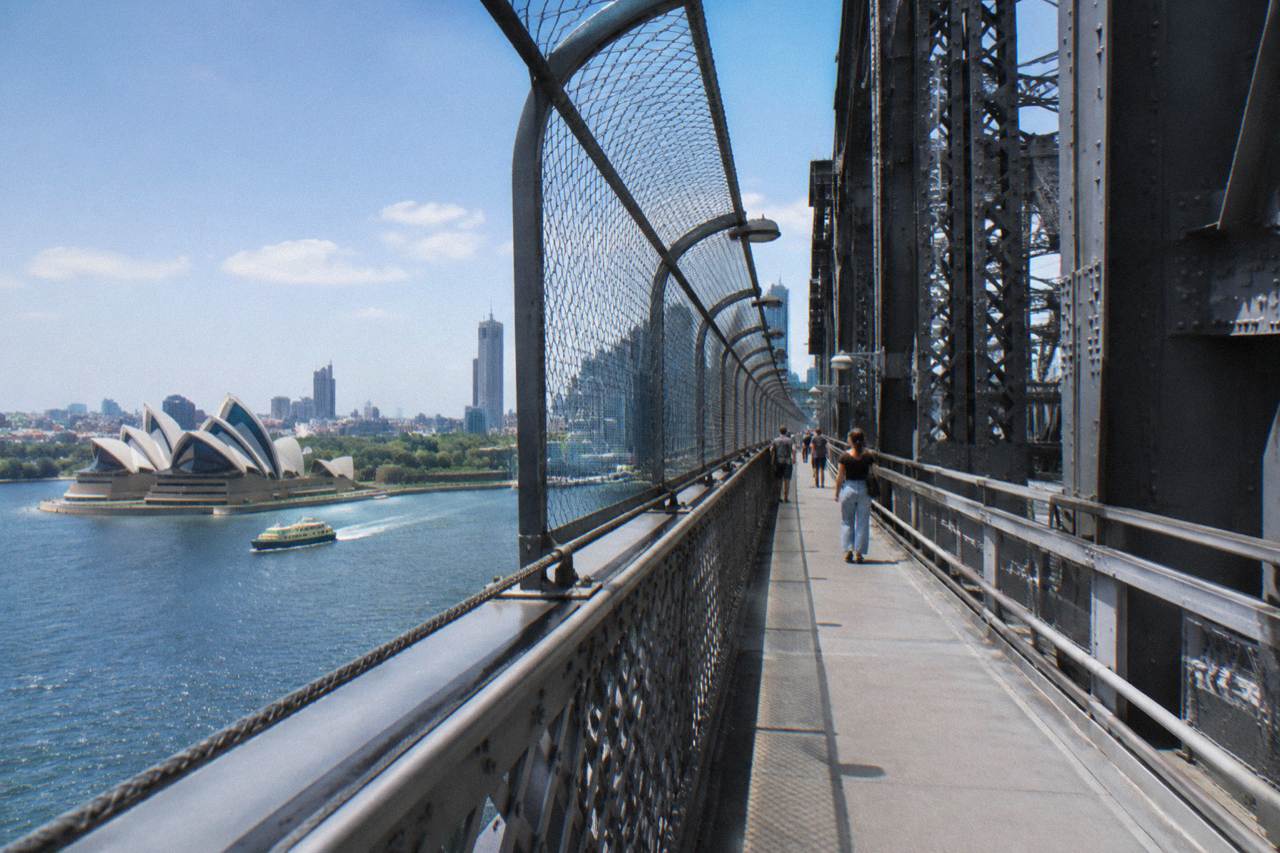
The Sydney Harbour Bridge answers its most common question with a split verdict, and the split matters more than most visitors expect. The bridge itself, all 1,149 metres of steel arch span between Dawes Point and Milsons Point, is a public piece of infrastructure with a free pedestrian walkway running along its eastern side. The famous climb over the top of the arch, the one seen in tourism campaigns and summit photographs, is a separate commercial product called BridgeClimb, with standard adult pricing that starts at roughly AUD $270 and moves upward with dynamic pricing. Same structure, completely different experiences, completely different costs. This article separates the two facts cleanly, because a lot of travel content blurs them, and then maps out what a visitor can actually do around the bridge for nothing at all. The short version: nobody climbs to the top of the arch for free, but everybody can walk across the bridge for free, and the free things clustered on both ends of it, from The Rocks to the Opera House forecourt to the harbour-side paths of Kirribilli, fill a full day without a single paid ticket. For orientation at street level, this directory also carries 5 free pay-what-you-want walking tours, 2 listed on GuruWalk and 3 exclusive to freetour.com, of which 3 are featured below.
Can You Climb The Sydney Harbour Bridge For Free?
No, the climb itself is not free, but the bridge is free to walk across. The BridgeClimb experience, the guided ascent over the top of the arch, is a paid product with dynamic pricing that starts at roughly AUD $270 for a standard adult climb, according to the pricing information gathered in this site's research pass. The pedestrian walkway along the eastern side of the span, by contrast, is a free public path, open to anyone, at any hour the walkway is open, with no ticket, no booking and no guide required. These are two distinct facts about the same structure, and conflating them is the single most common piece of confusion in Sydney trip planning.
The distinction deserves a careful unpacking, because the word "climb" does a lot of quiet work in the question. Walking the pedestrian walkway involves a gentle approach via stairs or ramps at either end, then a flat stroll across the deck level of the bridge, with the road and rail lanes running alongside and the harbour spread out below through the railings. It takes most people 20 to 30 minutes at a relaxed pace, longer with photo stops, and it delivers genuinely spectacular views: the Opera House from the north side, Lavender Bay and Luna Park's smiling face, the ferries cutting their wakes across the water, and the city towers stacked behind Circular Quay. It costs nothing. Climbing, in the sense the tourism industry uses the word, means harnessed ascent above the deck, up the arch's lower and upper slopes to the summit, 134 metres above the water. That is BridgeClimb's product alone, it runs on booked departures with provided equipment and a trained guide, and it is paid. There is no free version of it, no promotional loophole, no public-access path to the top of the arch.
A third paid option on the same structure sits between the two: the Pylon Lookout, housed in the southeast pylon tower, is a separate paid experience with its own admission charge, offering museum-style exhibits inside the pylon and viewing platforms partway up. It is not the summit and it is not the walkway, and it is not free either. So the honest ledger for the bridge reads: walkway, free; Pylon Lookout, paid; BridgeClimb, paid and the most expensive of the three. Everything else in this article deals with the free side of that ledger, and there is a lot of it, because the bridge sits at the centre of the densest cluster of genuinely free things to do in Sydney.
Why does the confusion persist? Partly because "climb the bridge" has become shorthand for the whole experience of seeing Sydney from the harbour span, and partly because older travel content sometimes describes the bridge in vague terms that let readers assume the summit is accessible. It is not. The arch's upper structure is closed to the public except through BridgeClimb's operations, and the safety fencing along the walkway makes that plain on arrival. But the free walkway delivers a large share of the photographic payoff, at deck height rather than summit height, and for a traveller watching a budget, that trade is one of the best in the city. The views from the deck are wide, unobstructed toward the Opera House, and constantly animated by harbour traffic. Many visitors who complete the paid climb report that the deck-level walk captures the majority of what they wanted: the water, the skyline, the ferries, the light.
The walkway also connects two of Sydney's most walkable free districts. On the southern end, the bridge deposits walkers into The Rocks, the historic quarter of converted warehouses, cobbled lanes and weekend markets. On the northern end, it lands in Milsons Point, with Luna Park's heritage face, the harbourside lawns of Kirribilli and the ferry wharves that loop back across the water. A free crossing therefore is not a detour, it is a spine: it stitches together a free historic precinct, a free amusement-park facade, free harbour viewpoints and a free ferry ride back, all on foot. Adding the free walking tours that cover this exact ground makes the loop even easier, and the 5 walks this directory ships, 2 on GuruWalk and 3 exclusive to freetour.com, are concentrated precisely around the bridge's southern approaches.
The platform detail matters for anyone planning to book. GuruWalk is the booking platform for 2 of the walks, and every walk on this site is a real listing run by an independent local guide, free to reserve with tips paid at the end at whatever the walker felt the experience was worth. Freetour.com carries the other 3, including the featured Sydney Rocks Free Tour, rated 9.5 out of 10 from 43 reviews on freetour.com's 10-point scale. GuruWalk's ratings run on a 5-point scale: Best Free Tours Sydney holds 4.55 out of 5 from 201 English-language reviews and 4.86 out of 5 from 183 Spanish-language reviews, 384 in total, and the Sydney Sunset Evening Tour holds 4.96 out of 5 from 51 reviews. Those figures belong to the platforms, not to this site, and this site operates no tours and takes no bookings. The table below sets out the full roster alongside the key free facts around the bridge.
| Walk / attraction | Platform or source | Rating (scale) | Reviews | Meeting point or location |
|---|---|---|---|---|
| Best Free Tours Sydney | GuruWalk (53905) | 4.55 EN / 4.86 ES (out of 5) | 384 total | Wharf 6, Circular Quay |
| Sydney Sunset Evening Tour | GuruWalk (67793) | 4.96 (out of 5) | 51 | Queen Victoria Building, George Street |
| Sydney Rocks Free Tour | freetour.com | 9.5 (out of 10) | 43 | The Rocks |
| Sydney Essential Tour Part One | freetour.com | 7.2 (out of 10) | 24 | Jacksons on George |
| Sydney Essential Tour Part Two | freetour.com | 7.1 (out of 10) | 6 | Royal Botanic Garden area (monument meeting point) |
| Sydney Harbour Bridge pedestrian walkway | Public infrastructure | Free, no booking | n/a | Eastern side of the span, access at The Rocks and Milsons Point |
| Sydney Opera House exterior and forecourt | Sydney Opera House | Free to visit | n/a | Bennelong Point, Circular Quay |
| Royal Botanic Garden Sydney | Garden's own visit page | Free general entry, open 7am to sunset | n/a | Farm Cove, adjacent to the Opera House |
One scheduling note before moving on: neither GuruWalk nor freetour.com publishes a fixed daily clock schedule for these walks in the research behind this site. GuruWalk's times come from a rolling availability window on the guide's own page, and the freetour.com exclusives carry no published departure times in this research pass. A visitor checks the guide's GuruWalk page or the freetour.com listing for the current window rather than assuming a set daily time. That is the honest state of the information, and it is better stated plainly than papered over with invented times.
The Bondi to Coogee walk belongs in this conversation for a simple reason: it is the other great free walk in Sydney, the coastal counterpart to the bridge's harbour crossing, and a visitor weighing whether the paid climb is worth roughly AUD $270+ should know that the city's two most celebrated walks, the bridge walkway and the coastal path, are both entirely free. The Bondi to Coogee walk is a free public path, roughly six kilometres of clifftop track linking Bondi Beach to Coogee Beach through Tamarama, Bronte, Clovelly and Gordons Bay. It costs nothing, it needs no booking, and it can be walked in either direction, with buses and trains at both ends. The scenery is the point: sandstone cliffs, ocean pools cut into the rock at Bondi, Bronte and Clovelly, and a chain of small beaches that each have their own character. From mid-October to early November the path doubles as an open-air gallery, because Sculpture by the Sea, Bondi, the free outdoor sculpture exhibition, installs works along the Bondi to Tamarama stretch, and the 2026 edition runs 16 October to 2 November 2026. That is a free-to-view event on a free path, and it is one of the strongest free experiences in the entire Sydney calendar. The walk is exposed in parts, so water, a hat and sensible shoes matter, and the standard seasonal caveat applies to swimming: check beach safety advisories on the day. As a companion to the bridge, the coastal walk answers the same question the bridge walkway answers, what does the city look like when experienced on foot for free, from the opposite direction.
The paid side of the bridge deserves its own honest paragraph, because this article is not in the business of pretending the climb does not exist. BridgeClimb is a paid experience with dynamic pricing, and the research pass behind this site recorded standard adult pricing at roughly AUD $270 and upward, moving with departure time, season and demand. That figure is a research snapshot, not a live price, and BridgeClimb's own current pricing page is the source for the exact number on any given day. What the money buys is real: a trained climb leader, all equipment, a safety briefing, a suit and harness, and around three hours on the arch, culminating at the summit 134 metres above the harbour. It is one of the most recognisable paid tourism products in Australia, and plenty of visitors consider it worth every dollar. But it is not free, it is not conditionally free, and there is no version of it that becomes free. The Pylon Lookout, the other paid option on the structure, is a separate product again, with its own admission charge for a partway-up viewing experience and heritage exhibits inside the southeast pylon. The two-fact framing is the honest one: the pedestrian walkway is free, and the climb and pylon are paid experiences on the same bridge, priced and booked separately. A budget-conscious traveller loses very little by choosing the free walkway and redirecting the climb budget toward, say, a longer stay, a harbour ferry pass, or simply keeping the money. For anyone who still wants a guided experience of the bridge and its surroundings without the climb price, the pay-what-you-want walking tours listed above cover the bridge's approaches, The Rocks and the Circular Quay foreshore at street level, with the guide paid by tip alone.
Customs House sits a few hundred metres from the bridge's southern approach, and it belongs in this article as one of the free indoor stops that fill out a bridge-centred day. The building itself is a Sydney landmark: a grand 1845-origin customs house fronting Circular Quay, with a sandstone facade, a glass-floored atrium and, famously, a model of the city laid out beneath that glass floor, letting visitors stand literally above a miniature Sydney. The research pass behind this site recorded the venue's public library and the model-city display as free to visit, drawn from the venue's own general site, with a moderate-confidence flag attached: the source was the venue's general pages rather than a directly fetched current visit page, so re-checking Customs House's own current visit information before relying on the detail is the sensible move. That is the honest state of the record, and this site would rather state the confidence level than publish a bare "free" claim a reader could act on and be wrong about. What is not in doubt is the building's role in a free walking route: it sits on the Circular Quay side of the loop that runs from the bridge walkway through The Rocks, along the quay past the Opera House forecourt, and into the Royal Botanic Garden, which is free for general entry and open from 7am to sunset. The Opera House pairing follows the same two-fact pattern as the bridge: the exterior and forecourt are free to visit, while guided tours inside the building are paid. Customs House, in that context, is a free or near-free indoor stop with toilets, shade and a city model that children in particular love, positioned at the exact point where most bridge walks end up anyway.
Free Things To Do In Sydney Nearby
The free attractions around the bridge are not a consolation prize for skipping the climb, they are a full itinerary in their own right, and they cluster within a 30-minute walk of either end of the span. The three picks below are the harbour-side heart of that cluster: the Cremorne Point to Kirribilli walk, the bridge walkway itself, and Watsons Bay with Camp Cove. Each is a free public path or place, verified in the free-facts research behind this site, and each rewards the same kind of unhurried, on-foot attention that makes the bridge crossing so good.
Start with the bridge walkway, since it is the article's subject. The free crossing works best in the early morning or late afternoon, when the light is low and the ferry traffic is at its prettiest. The southern approach from The Rocks puts walkers on the eastern side of the span, facing the Opera House, and the northern end lands at Milsons Point, where Luna Park's 1935 face, a free thing to look at and photograph even when the park inside is ticketed, greets arrivals. From there, Kirribilli's harbour lawns and Jeffrey Street Wharf offer some of the best free Opera House views in the city, with the bridge itself framing the shot from below. The walk back can be another bridge crossing, a loop through Lavender Bay, or a ferry from Milsons Point or Kirribilli back to Circular Quay, using the Opal card's capped daily fares. The research pass recorded the adult Opal daily cap at AUD $19.30 Monday to Thursday and AUD $9.65 Friday to Sunday and public holidays, with a weekly cap of AUD $50, sourced to the transportnsw.info fares page, and those caps cover the ferry network. That means a day of harbour hopping by ferry, including the Manly ferry, is capped at a known, modest figure, a fact that pairs naturally with a free walking itinerary.
The Cremorne Point to Kirribilli walk extends the same logic to the northern harbour shore. It is a free public path, running along the Cremorne Point foreshore past heritage residences, the small Cremorne Point ferry wharf and the harbour pool at Cremorne, then continuing around to Mosman Bay and connecting, by ferry or on foot, toward Kirribilli and the bridge's northern end. The walk delivers postcard views south across the water toward the city, the Opera House and the bridge, and it has the quiet, residential character that the busy quay-side stretches lack. Combining it with the bridge walkway makes a substantial free day: ferry to Cremorne Point, walk the foreshore, ferry or walk on to Kirribilli, cross the bridge south, and finish in The Rocks as the evening comes on. The Sydney Sunset Evening Tour, one of the 5 walks this directory ships, is the GuruWalk-listed option for exactly that time of day, rated 4.96 out of 5 from 51 reviews on GuruWalk's 5-point scale, and it covers the harbour's best angles as the light fades.
Watsons Bay and Camp Cove are the saltwater end of the free harbour set. Watsons Bay, reached by the ferry from Circular Quay, is a free-to-roam headland village with a working fishing harbour, beachside lawns and the start of the coastal path toward South Head. Camp Cove, a small sheltered beach just beyond the village, is free public space and a calm swimming spot by harbour standards. The walk from Watsons Bay up through Camp Cove toward the South Head defenses passes some of the oldest military architecture in Australia, and the whole route is a free public path with continuous harbour views back toward the city and the bridge, 10 kilometres distant across the water. The ferry out is Opal-capped like every other service, and the day's total spend for a Watsons Bay outing can realistically sit under the weekend daily cap of AUD $9.65, with everything on land free.
Beyond the paths, the free-attraction list around the bridge keeps going. The Queen Victoria Building, the ornate 1898 shopping palace a short walk up George Street from The Rocks, is free to enter and wander regardless of whether anything is bought. The Anzac Memorial in Hyde Park is free entry. The State Library of NSW offers free general entry, exhibitions and reading rooms. The Art Gallery of NSW states plainly on its own visit page, "Free general entry. Entry fees apply to some exhibitions." The Australian Museum states, "General entry to the Australian Museum is FREE." Hyde Park Barracks Museum and the Museum of Sydney are both listed with free entry on the NSW Government's attractions pages. The Chau Chak Wing Museum at the University of Sydney is explicitly free with no ticket. The Royal Botanic Garden is free for general entry from 7am to sunset, sitting directly behind the Opera House. The Rocks Markets are free to browse, with vendor goods paid as usual. Two cautions complete the honest picture: the Museum of Contemporary Art Australia reintroduced paid general admission in 2025 after decades of free entry, per a Sydney Morning Herald report dated 2026-05-02, so it must not be planned as a free museum; the museum's own tickets page at mca.com.au confirms adult admission at AUD $20, resolving an earlier conflict between research passes. And Sydney's NYE foreshore vantage points are mostly free, but the Botanic Garden's own managed areas on 31 December are ticketed, so the free spots are the other public foreshore locations.
The final word on the original question is the one worth repeating: the Sydney Harbour Bridge can be walked for free, on the pedestrian walkway, at any time the walkway is open, with no ticket and no booking. The climb over the arch is a paid experience at roughly AUD $270+ for a standard adult, and the Pylon Lookout is a separate paid experience again. Everything a visitor does around the bridge, the walks, the parks, the galleries, the ferry loops, the pay-what-you-want tours, can be done for nothing beyond transport and tips, and the 5 walks this directory ships, 2 on GuruWalk and 3 exclusive to freetour.com, put a local guide in the middle of it for the price of a thank-you. That is the real answer to "can you climb the Sydney Harbour Bridge for free": not to the summit, no, but across, around and underneath it, yes, again and again.
For related reading on this site, see the Which Museums In Sydney Are Free? page and the Can I Go Inside Sydney Opera House For Free? page.