Barangaroo Reserve: A Free Sydney Harbour Park
A six-hectare headland park rebuilt from a concrete container terminal now sits free and open on Sydney's western harbour edge, sandstone blocks, native planting and all.
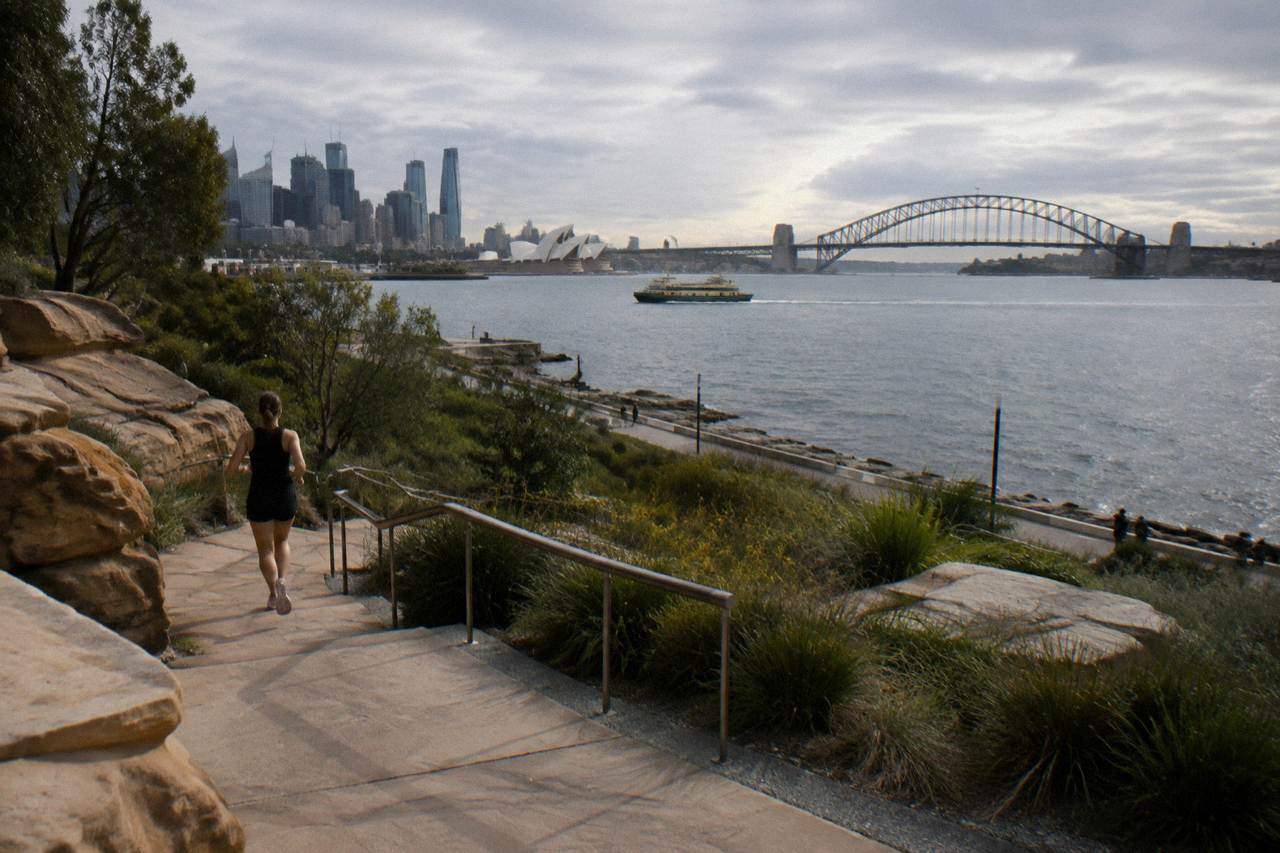
Barangaroo Reserve is the rare Sydney harbour project that asked for nothing at the gate. The six-hectare park occupies the headland where a concrete container terminal stood for decades, rebuilt with more than 10,000 sandstone blocks cut to echo the 1836 shoreline. Entry costs nothing, the harbour views cost nothing, and the whole site sits a ten-minute walk from Circular Quay. This guide covers what the reserve actually offers, the free sights around it, and how a free, pay-what-you-want walking tour fits into a day on this side of the harbour. The site's roster is small and honest: 5 free walks in total, 2 on GuruWalk and 3 exclusive to freetour.com, of which 3 carry a card below. Every one of those walks is free, pay what you want, run by independent local guides who publish their listings on GuruWalk or freetour.com and take no booking fee up front; a visitor reserves a free spot and tips the guide whatever the walk was worth at the end. That model suits Barangaroo well, because the reserve itself is the same kind of offer: a genuinely public piece of the harbour with no price attached to standing on it and looking out.
Barangaroo Reserve: A Free Sydney Harbour Park
Yes, Barangaroo Reserve is completely free to enter and open to the public every day. There is no gate fee, no ticket and no timed entry for general visits. The park is a public harbour headland managed as open space, and its lawns, sandstone escarpment walk, lookouts and native gardens are all free to wander at any hour the reserve is open. Nothing in the list above carries a condition. The Cutaway, the cultural space carved into the headland beneath the reserve, hosts exhibitions and events where some are free and some are ticketed, and the restaurant precinct at the southern end is entirely paid, but those are separate experiences sitting inside or beside the park, not conditions on entering it. A visitor can walk the full headland circuit, sit on the lawns and leave again without ever being asked for money, which is worth stating plainly because so much of the surrounding precinct is commercial.
The reserve's defining feature is its reconstructed headland. When the container terminal was demolished, the shoreline was rebuilt to approximate its 1836 profile, using sandstone excavated from the site itself and shaped into the stepped escarpment that now runs along the water. The result is a walkable cliff face where the harbour laps directly against the stone, something no other point on the Sydney CBD waterfront offers. The planting scheme is almost entirely native, with more than 75,000 indigenous plants across the terraces, which means the park flowers, seeds and changes colour through the seasons rather than holding one manicured green look year-round. That choice has a practical payoff for visitors: there is no bad season for the walk, only a different one. In spring the native planting flowers, in summer the lawns fill with picnics against the water, and in the cooler months the low harbour light makes the sandstone read almost orange in the late afternoon. The escarpment walk also does something the older harbour foreshore cannot: it lets a visitor stand at water level on genuine rock, with the harbour on one side and the stepped terraces rising behind, rather than on a promenade deck. The 1836 reference matters, too, because it gives the headland a shape that predates every wharf and ferry terminal around it, a shoreline closer to what the first colonial surveyors recorded than to anything the container era left behind.
Two practical notes matter for visitors in the current season. Marrinawi Cove, the small harbour swimming spot on the reserve's northern edge, is mid-upgrade, with works that started around mid-September 2026 and a target completion before summer, so expect localised fencing and disruption around the cove even though the reserve overall stays open. And on New Year's Eve the picture changes: free public foreshore vantage points exist across Sydney for the fireworks, but Barangaroo and other prime spots fill early, and some adjacent managed areas run ticketed events, so the free-access plan for NYE needs its own thinking. There is also a longer-term project to be aware of on the eastern side of the harbour: the Royal Botanic Garden's Domain Gateway transformation is scheduled to commence in 2026, though as of the research for this guide it was not yet affecting general access to the Garden. For Barangaroo specifically, the cove works are the live item; the rest of the reserve's paths, lawns and lookouts are unaffected and open as normal.
Mrs Macquaries Chair sits on the other side of the harbour's Farm Cove, and it earns its place in any free-harbour-sight plan. The sandstone bench was carved by convicts in 1810 for Elizabeth Macquarie, the governor's wife, who liked to sit and watch the ships come through the Heads. The seat itself is free to visit, and the walk out to it through the Royal Botanic Garden, which has free general entry from 7am to sunset, is one of the best free strolls in the city. From the chair, the framed view takes in the Opera House and the Harbour Bridge side by side, which is the photograph most visitors leave Sydney with. The whole outing costs nothing, and it pairs naturally with Barangaroo: the two bookend the eastern and western edges of the same harbour shoreline. Doing both in one day is a realistic free itinerary. The walk from Barangaroo around the cove through Circular Quay and into the Garden is roughly half an hour at an easy pace, past the Opera House forecourt, which is itself free to visit; the Opera House is a two-fact case where the exterior and forecourt cost nothing while guided tours inside are a separate paid experience. Anyone building a day around the harbour's two bookends gets the full sweep of Sydney's best public space, from the reconstructed western headland to the carved eastern bench, and pays for none of it.
New Year's Eve is the one night a year when Sydney's free harbour access gets complicated, and it is worth planning rather than assuming. Most public foreshore vantage points for the fireworks are free, including spots like Mrs Macquaries Point outside the Botanic Garden's managed zone and Balmoral on the north shore. But the Royal Botanic Garden itself is closed to general public entry on 31 December, with specific lawns and steps run as ticketed, timed-entry, managed vantage points with no pass-outs. Barangaroo's foreshore also hosts ticketed NYE events in parts of the surrounding precinct. The free options are real and plentiful, but they are the other foreshore spots, not the garden's own managed areas, and arriving early matters more than money does on the night. That last point deserves emphasis. On 31 December the free vantage points fill hours before the midnight fireworks, and a visitor who arrives at 9pm hoping to walk into a free harbourside spot is more likely to be turned away by crowding than by a ticket price. The practical plan for a free NYE is to pick a foreshore position in the afternoon, treat the wait as a picnic, and use the ferry network to move there, keeping in mind that the Opal daily cap of AUD $9.65 on Fridays, weekends and public holidays covers every Opal service including the ferries, though the Airport station access fee sits outside the cap.
The Harbour Bridge looms over every harbour view in Sydney, and it is a two-fact case that honest guides keep separate. The pedestrian walkway on the eastern side of the bridge is free, and walking it end to end, from The Rocks to Milsons Point, costs nothing and delivers the best free elevation over the harbour anywhere in the city. BridgeClimb is the paid experience on the same structure: a guided ascent over the arch with dynamic pricing that starts around AUD $270 for a standard adult climb. The Pylon Lookout, housed in the bridge's south-east pier, is a separate paid attraction as well. None of that diminishes the free walkway, which is the version most visitors actually want, and it sits within walking distance of Barangaroo via The Rocks. The full route makes a strong free loop from the reserve: west to east along the foreshore, through The Rocks' oldest laneways, up onto the bridge walkway, across to Milsons Point and Luna Park's exterior, then back by ferry to Circular Quay if the legs are tired. Kirribilli on the far side rewards the crossing too; the Cremorne Point to Kirribilli walk on the north shore is a free public path that gives the bridge and the harbour a completely different angle, and the ferry back is covered by the same Opal daily cap. Anyone who wants the bridge's paid climbs should book BridgeClimb on its own terms; anyone who wants the view, the wind and the elevation pays nothing at all.
Back at Barangaroo Reserve itself, the free list is long. The Wulugul Walk traces the waterline around the headland, passing the Cutaway, a large cultural space carved into the sandstone beneath the reserve that hosts exhibitions and events, some free and some ticketed. The Stargazer Lawn and the Burrawang lawn offer picnic space with harbour frontage that would command a premium anywhere else in the city. The reserve connects directly to the Barangaroo restaurant precinct at its southern end, which is paid territory, but the park itself never charges. The nearby International Towers and the harbour promenade stretching south toward Darling Harbour extend the free walk for anyone with energy left. That southern promenade is the quietest good free walk on this side of the CBD: it carries on past the towers through Walsh Bay's converted wharves, under the Harbour Bridge approach, and keeps going toward Darling Harbour, all on public waterfront paths that never close and never charge. For a structured introduction to the harbour's western shore, the Sydney Rocks Free Tour, exclusive to freetour.com and rated 9.5 out of 10 from 43 reviews, covers The Rocks end of the same shoreline, and the reserve is an easy extension of it. The tour meets in The Rocks and works through the oldest intact urban fabric in Australia before finishing a short walk from the cove; continuing on to Barangaroo turns a two-hour walk into a full free afternoon on the harbour's western edge, one walk handing the visitor to the other at exactly the point where the colonial town gives way to the modern headland.
Free Things To Do In Sydney Nearby
The reserve sits close to a cluster of other genuinely free sights, and the roster below shows how the site's 5 free walks compare before the free attractions that surround them.
| Walk | Platform | Rating | Reviews | Meeting Point |
|---|---|---|---|---|
| Best Free Tours Sydney | GuruWalk | 4.55 EN / 4.86 ES out of 5 | 384 total | Wharf 6, Circular Quay |
| Sydney Sunset Evening Tour | GuruWalk | 4.96 out of 5 | 51 | Queen Victoria Building, George Street |
| Sydney Rocks Free Tour | freetour.com | 9.5 out of 10 | 43 | The Rocks |
| Sydney Essential Tour Part One | freetour.com | 7.2 out of 10 | 24 | Jacksons on George |
| Sydney Essential Tour Part Two | freetour.com | 7.1 out of 10 | 6 | Royal Botanic Garden area (monument meeting point) |
| Art Gallery of NSW | Free entry | Free general entry, some exhibitions paid | Free | The Domain |
| Australian Museum | Free entry | Free general entry | Free | opposite Hyde Park |
| Royal Botanic Garden | Free entry | Free, 7am to sunset | Free | Farm Cove |
| Queen Victoria Building | Free entry | Free to enter and browse | Free | George Street |
| Anzac Memorial Hyde Park | Free entry | Free entry | Free | Hyde Park |
Watsons Bay and Camp Cove sit at the end of a ferry ride that is itself one of Sydney's better-value experiences, with the Opal daily fare cap at AUD $19.30 Monday to Thursday and AUD $9.65 Friday to Sunday and public holidays covering the Manly ferry and every other Opal service. Camp Cove is a small, sheltered beach with free public access, and the South Head heritage trail from there passes Lady Bay and out toward Hornby Lighthouse, all on free public paths. The gap in the headland at the Gap lookout delivers the ocean-side drama. None of the walking costs anything once the ferry fare is paid. Watsons Bay works as a half-day free excursion from Barangaroo: ferry from Circular Quay, a loop out to the lighthouse and back past the Gap, then fish and chips on the wharf's paid side or a picnic brought from home on the free side. The ferry ride itself is the best free-adjacent harbour cruise in the city once the capped fare is paid, threading past the harbour islands and the eastern shorelines that this guide's walking routes cover on foot. From the water, Barangaroo's reconstructed headland reads exactly as intended, a stepped sandstone profile on the western edge that looks older than the glass towers standing behind it.
The Rocks Markets run on weekends in the historic laneways just around the cove from Barangaroo, and browsing them is free. The market stalls themselves sell goods, so the free part is the looking, the laneway atmosphere and the surrounding colonial-era streetscape, which is the oldest intact urban fabric in Australia. The Rocks is also where the Sydney Rocks Free Tour begins, the freetour.com exclusive rated 9.5 out of 10 from 43 reviews, making a market morning and a free walking tour an easy pairing. The same neighbourhood holds more free ground worth naming. Sydney Observatory sits on the hill above The Rocks, and while its night tours and telescope sessions carry their own pricing that this site's research has not confirmed at a current figure, the observatory grounds themselves are free to walk, with some of the best elevated views over the harbour bridge approaches. Susannah Place, the surviving terrace-house museum on Gloucester Street, is a genuine Rocks attraction whose current admission price is not confirmed in this site's research, so treat it as check-before-visiting rather than free. The honest picture of The Rocks is that the streets, the lookouts, the markets' browsing and the free walking tour cost nothing, while several of the small museums inside the buildings do, and the line between the two is easy to see on foot.
Centennial Park is the eastern complement to Barangaroo's western harbour edge: 189 hectares of free public parkland built on the site where Australia was federated in 1901. Entry is free, the ring of internal roads is popular with cyclists and the paperbark groves and ponds draw birdlife that seems improbable this close to a city centre. It is a different register of free Sydney, quieter and further from the water, but it rounds out a picture of a city that gives away an unusual amount of its best public space. Paddington Reservoir Gardens sits roughly on the way, another of the verified free parks, a sunken garden built inside the ruins of a nineteenth-century water reservoir, with open hours and no entry charge of any kind. Chained together, a free Sydney day can run Barangaroo in the morning, the harbour foreshore at midday, and Centennial Park's ponds and paperbarks in the late afternoon, with nothing spent on entry anywhere along the line. The city's free-park inventory is genuinely deep: the verified dataset behind this site counts parks, harbourside paths and historic sites among 28 unconditionally free records, which is an unusually generous tally for a city of Sydney's profile.
A short detour inland from Barangaroo covers several of the city's free indoor sights, useful on a wet or very hot day. The Queen Victoria Building on George Street is free to enter and browse, a full Victorian-era shopping arcade with no door charge; the shopping is paid, the architecture and the browsing are not. The Anzac Memorial in Hyde Park is free to enter, combining a commemorative hall with an interpretation centre, and it sits in a park that is itself free public space. Hyde Park Barracks Museum and the Museum of Sydney, both run by Museums of History NSW, are both listed as free entry on the NSW Government's own locations-and-attractions pages, which makes them two of the easiest genuinely free museums in the CBD to reach from Barangaroo. The Art Gallery of NSW, in The Domain a walk past Mrs Macquaries Chair, has free general entry with fees applying only to some exhibitions, and the Australian Museum opposite Hyde Park states plainly that general entry is free. The State Library of NSW offers free general entry to its exhibitions and reading rooms. Two cautions belong in the same breath, because this site's research keeps its free claims verified rather than assumed. The Chinese Garden of Friendship near Darling Harbour is paid, at AUD $12 for an adult, $8 for a child and $30 for a family, so it is not part of any free itinerary despite its harbourside address. And the Museum of Contemporary Art Australia at Circular Quay should not be relied on as free: it reintroduced paid general admission in 2025 after decades of free entry, a change reported by the Sydney Morning Herald, and this site treats it as paid. The Powerhouse Museum Ultimo, also not far from the Barangaroo side of town, is confirmed closed to the public for a major revitalisation project, so it belongs on no itinerary at all for now. The pattern is clear enough to plan around: the state-run museums and galleries on this list hold their free general entry, the small private and specialty venues are paid or unconfirmed, and checking this guide's roster beats guessing.
Two seasonal festivals belong on any free-Sydney calendar that starts from Barangaroo, because the harbour is their stage. Sculpture by the Sea, Bondi runs 16 October to 2 November 2026, a free outdoor sculpture exhibition strung along the Bondi to Tamarama stretch of the Bondi to Coogee coastal walk, itself a free public path and one of the city's signature walks. Vivid Sydney is officially announced for 28 May to 19 June 2027, with the outdoor light walk free to view across the harbour foreshore, and the same durable split applies: the light installations in public space cost nothing, while some Vivid Music and Vivid Ideas sessions are ticketed. Neither event needs a ticket to be worth the trip. A visitor who times a Sydney stay around either one gets the harbour at its most theatrical, Barangaroo's lawns and lookouts among the free viewing positions for the western side of the light walk, and the ferry network moving between precincts under the same capped Opal fares that apply the rest of the year. For a free itinerary built around Barangaroo Reserve, the festivals are the finishing move: the park is the everyday free anchor, and the seasonal events are the days it is at its best.
For related reading on this site, see the Free Museums In Sydney page and the Free Tourist Attractions In Sydney page.
Frequently Asked Questions
Is Barangaroo Reserve Free To Enter?
Yes, completely. General entry to the reserve is free at all times, with no gate, ticket or booking. The adjacent Barangaroo restaurant precinct and any ticketed events in the Cutaway cultural space are separate paid experiences, but the park itself, its lawns, lookouts and the Wulugul Walk, never charges for access. The same holds across the surrounding free-attraction cluster: the harbourside promenade south toward Darling Harbour, the foreshore paths north toward Walsh Bay and the bridge approach are all public walkways with no entry cost. The only paid items near the reserve are the ones this guide names directly, the restaurants, the ticketed Cutaway programming, the Chinese Garden of Friendship further south at AUD $12 for an adult, and the bridge's paid BridgeClimb and Pylon Lookout experiences, each of which is a distinct product rather than a condition on any free access.
How Do You Get To Barangaroo Reserve?
The reserve is a short walk from Circular Quay, roughly ten minutes around the cove, and it is served by the Barangaroo and Wynyard stations on the city's rail network. Ferries to nearby Darling Harbour and Walsh Bay also stop within walking distance. The Opal daily fare cap of AUD $19.30 Monday to Thursday and AUD $9.65 Friday to Sunday and public holidays applies to all these services, though the Airport station access fee is excluded from that cap. The weekly cap is AUD $50 for anyone staying longer. In practice the cheapest plan is also the best one: arrive by train to Wynyard or Barangaroo station, walk the reserve and the foreshore on foot, and use the ferries only when crossing the harbour, since every one of those crossings counts inside the same daily cap.
Can You Swim At Barangaroo Reserve?
Marrinawi Cove is the reserve's harbour swimming spot, but it is mid-upgrade as of late 2026, with works that started around mid-September 2026 and a target completion before summer. Expect localised fencing and disruption at the cove while the rest of the reserve stays open. Check the current state of the works before planning a swim. If a harbour swim is the priority, the free alternatives on this guide's roster are Watsons Bay's Camp Cove, a sheltered public beach reached by ferry under the same Opal caps, or the ocean beaches along the Bondi to Coogee coastal walk, all free public access, with the usual seasonal caveat of checking Bureau of Meteorology and council alerts for rips and advisories on the day.
What Free Walking Tours Cover The Harbour Area?
The site's roster holds 5 free walks: 2 on GuruWalk and 3 exclusive to freetour.com. Best Free Tours Sydney, on GuruWalk, is rated 4.55 out of 5 from its English listing and 4.86 out of 5 from its Spanish listing, 384 reviews in total, and meets at Wharf 6, Circular Quay, a short walk from the reserve. The Sydney Sunset Evening Tour on GuruWalk holds 4.96 out of 5 from 51 reviews, and the Sydney Rocks Free Tour on freetour.com holds 9.5 out of 10 from 43 reviews. All are free, pay what you want: a visitor reserves a free spot and tips the guide whatever the walk was worth. Two further walks, the Sydney Essential Tour Part One and Part Two, also live on freetour.com at 7.2 out of 10 from 24 reviews and 7.1 out of 10 from 6 reviews respectively, each with its own page on this site. None of the walks carries a published fixed clock schedule in this site's research, because times come from a rolling availability window on GuruWalk's and freetour.com's own pages, so the practical move is reserving a free spot and reading the confirmed start time there. For Barangaroo specifically, the Best Free Tours Sydney meeting point at Wharf 6 and the Rocks tour's meeting point both sit within an easy walk of the reserve, which makes any of the three cardable walks a natural anchor for a day on the western harbour edge.